Showing posts with label Invitation. Show all posts

Thursday, 8 June 2023

Persistence


Sometimes it's knowing when to keep trying, when to give up, when to try another day.

In the traditional milongas in Buenos Aires, it is well known that if you turn down an Argentinian guy who invites you, he probably won't bother you again.

A: If a guy turned down your interest down might you look to him another time?

B: Of course!    

A: So when would you give up? 

B: When it was clear he wasn’t going to change his mind.


Sunday, 28 May 2023

"Snobby" dancers

Public domain vectors

There has been a theme, in the last few months, albeit interrupted, about that see-saw, that balancing act of invitation and acceptance, of equal desire: the right person in the right place at the right time.

In the milonga, the classic lament one hears upon someone being rejected for dance is:  “they’re snobby”, picky - or their tone says it instead. 

People who say this have not been in the position where they don’t want to dance with someone.  Or, they have, but they fail to extrapolate that when the boot is on the other foot. Or maybe that person doesn’t want to dance with someone but submits to pressure and therefore wrongly expects that everyone else should make the same mistake. 

Empathy includes respecting other people’s choices even if you don’t understand them. It means accepting a rejection or a lack of interest and moving on.  


Saturday, 27 May 2023

The pest / El moscón

Sillygwailo


The milonga has the great advantage of being a social and visual environment, so continued harassment to dance by a guy is extremely unlikely.

I asked a Spanish friend to check over the Spanish version of  Muggers which starts with an analogy with the female robber fly. A fly in Spanish is "una mosca". The suffix ón suggests something bigger than normal. I didn't know it at the time but in Spanish slang, "un moscón" is a guy who won't leave you alone. (RAE: An annoying an tiresome man, especially in his amorous endeavours".  Basically,  a pest.

"Un moscardón" is a worse version of the same thing (according to the RAE: "Impertinent, annoying, man, a nuisance".) ""Qué mosca cojonera", is the vulgar expression you might use if you were really annoyed: "What a pain in the arse/creep."

At a milonga recently where, in the cortina (interval music signifying the end of that dance), all the dancers were much closer together than I find normal or comfortable, an older guy had several times tried to make eye contact from very close range. Eventually he walked right up to invite verbally while I was chatting. I said no thank-you, and that was the end of it. That is usually as bad as it gets, which is to say, manageable, if you know the ropes or simply have good instincts.

*

La milonga tiene la gran ventaja de ser un entorno social y visual, por lo que el acoso continuado para bailar, por parte de un hombre, es extremadamente improbable.

Le pedí a una amiga que revisara la versión española de "Atracadores", que comienza con una analogía con la mosca ladrona. En el argot español, un moscón significa un tipo que no te deja en paz. (RAE: "Hombre pesado y molesto"), y "un moscardón" es una versión peor de lo mismo. (RAE: "Hombre impertinente que molesta con pesadez y picardía").  La expresión vulgar, "qué mosca cojonera", es lo que podrías decir si estuvieras realmente enojada.

Hace poco, estaba en una milonga en la que, durante la cortina (música no tango durante la cual la gente se retira de la pista), los bailarines estaban más cerca unos de otros de lo que yo estaba acostumbrada y no siempre era cómodo.  Un hombre mayor intentó varias veces establecer contacto visual desde muy cerca, lo cual evité. Finalmente se acercó para invitarme a bailar verbalmente mientras yo charlaba con otra persona. Le dije que no, que gracias, y se acabó el asunto. No suele ocurrir nada peor que esto y es manejable si se conocen los entresijos de la milonga o simplemente si tienes buenos instintos.


Estoy muy agradecida a Flor por su ayuda con la traducción. Cualquier error restante es sólo mío.

Monday, 10 April 2023

Stalemate / Quién no se moja el culo no pesca peces


In chess, stalemate is when In chess, stalemate is when the player can do nothing more. In Spanish it's called the "drowned king."

"Stalemate" is not a fun word in English but then the state of two people wanting to dance with one another but neither of them daring, is not fun either. They have missed their opportunity and are stuck. 

The Spanish title, translated as "He who doesn't get his arse wet, won't catch fish," was given by a Catalan friend to whom I was trying to explain the concept.  More politely, you can avoid anatomical references and use the impersonal, reflexive "se": El que quiera peces, que se moje:  he who doesn't get wet, won't catch fish. The Spanish certainly conveys the idea of needing to risk something to gain something but the English equivalent:  "There's no such thing as a free lunch" has a different sense - of having to pay later for something that you benefit from today.

In life, as in the milonga, sometimes, we think no move to invite or to signal availability is a rejection, when actually, it's simply that neither of two people, for some reason, think it's their turn to signal interest and then you can miss out.  I experienced, in the milonga, a misunderstanding like this that lasted the best part of ten years. Luckily, a change of circumstance offered a fresh start and we began dancing. Sometimes you are just waiting for the right time, and it can take...a while. 


Maybe the clue is in the picture: sometimes it's worth taking a risk and not overthinking, because how much do you really risk anyway?

*

En ajedrez, el rey ahogado —o simplemente ahogado— es una situación que se produce cuando cuando el jugador no puede hacer nada más. El equivalente en inglés es "stalemate". "Stalemate" no es una palabra divertida en inglés.  En inglés, "stale" se asocia al pan o al pastel que ya ha pasado su mejor momento: "stale bread" es pan duro. 

El estado de dos personas que quieren bailar entre sí, pero ninguna de las dos se atreve, tampoco es divertido. Han perdido su oportunidad y están atascados.  El título en españo me lo dio un amigo catalán al que intentaba explicar el concepto.  Más cortés, se puede evitar las referencias anatómicas utilizando el "se" impersonal y reflexivo: El que quiera peces, que se moje. El español transmite sin duda la idea de necesitar arriesgar algo para ganar algo, pero el equivalente en inglés: "There's no such thing as a free lunch" (No existe un almuerzo gratis) tiene un sentido diferente: el de tener que pagar más tarde por algo de lo que te beneficias hoy.

En la milonga, como en la vida, ninguna de unas dos personas, por cualquier razón, podría pensar que es su turno de mostrar interés en la otra. Pues, la otra puede pensar que esa supuestamente falta de interés es un rechazo. Así, te lo puedes perder.

Yo viví, en la milonga, un malentendido como éste que duró casi diez años. Por suerte, un cambio de circunstancias nos ofreció una nueva oportunidad y empezamos a bailar. A veces sólo se está esperando el momento justo, y puede llevar un buen rato.

Quizá la pista esté en la imagen de arriba. Merece la pena atreverse, y no darse vueltas, porque al final ¿cuánto arriesgas realmente?

Estoy muy agradecida a Pepe y a Reinaldo por su ayuda con la traducción. Cualquier error restante es sólo mío.

Friday, 7 April 2023

Opportunity / Oportunidad


During the last week of March, for just a few days breeze brought the fragrance of this blossom across my path. It was utterly delightful, appreciated even more for its transience and in the knowledge that had I not gone out, or on that day or at that time, I might never have experienced it.


The opportunity to dance in the milonga is like that blossom, there for a few mere seconds for the dancer to experience and respond.


En la última semana de marzo, durante unos días, la brisa trajo la fragancia de esta flor a mi camino. Era deliciosa, apreciada aún más por lo efímero, por saber que si no hubiera salido, o en ese día o en ese momento, quizá nunca la habría experimentado.  

La oportunidad de bailar en la milonga es como esa flor, que está ahí durante unos segundos para que el bailarín la experimente y responda.


Estoy muy agradecida a Ale por su ayuda con la traducción. Cualquier error restante es sólo mío.

Thursday, 30 March 2023

Ensnarement? / Las Droseras


The Cape sundew - Wikimedia commons


This text has been revised and republished on 20/5/23 from the original date of publication on 30/3/23.  

Sundews are one of the kinds of carnivorous plants, a concept slightly alarming and unnatural. They attract their prey by nectar glands exuding glistening droplets that shine like the sun. But the droplets are fatally sticky.

In the milongas there are some younger women, not many, who use chat as a strategy to get dances. They know it works. Sweet talk, charm, feminine wiles, call it what you will, few guys will resist that come-on from a younger woman. But there is something undignified watching young women resorting to this especially when all they generally need do is look young, pretty and willing. Besides, in these situations guys tend to want to look, touch and feel more than listen.

Knowing people unquestionably means more dances, yet it’s a fine line: social chat versus chat to try to ensnare a guy.

*

Este texto ha sido revisado y reeditado a partir de la fecha original de publicación en 30/3/23

Las droseras son un tipo de planta carnívora, un concepto un poco alarmante, antinatural. Atraen a sus presas mediante glándulas de néctar que exudan gotas relucientes que brillan como el sol. Pero las gotitas son mortalmente pegajosas. 

En la milonga hay algunas mujeres, pocas, no muchas y sobre todo jóvenes, que se involucran en una conversación como estrategia para bailar. Saben que es eficaz. Engrupir, engatusar echar flores, llamálo como quieras, pocos hombres se resistirán a la insinuación de una mujer joven.  Pero hay algo indigno sobre todo cuando lo único que necesitan, en general, es parecer jóvenes, guapas y dispuestas. Además, en estas situaciones los chabones tienden a querer mirar, tocar y sentir más que escuchar.

Conocer gente significa sin duda más bailes, sin embargo hay un límite sutil entre la charla social frente a charlarlo para que la invite a bailar.


Estoy muy agradecida a Angel, Ale, Amelia, Juan Carlos, Marta y a los miembros del foro WordReference por su ayuda con la traducción. Cualquier error restante es sólo mío.

Wednesday, 29 March 2023

The free spirit's advice / Consejo del espíritu libre

Nick Kenrick


My friend dances well despite being a new dancer.  We went to a milonga that was chock-a-block so we sat on the stage where there were extra tables and chairs and more space.  But perhaps as she was not well known she was not getting invitations to dance and I started to worry for her. 

I asked the free spirit who knows everyone, dances everywhere, how we could help my friend get more dances. The free spirit said: She should get off the stage.  She looks too remote up there.  Invitation doesn't happen much between different levels.  She should sit at a different table each tanda and chat to people. 

The free spirit said it had taken her five months to get dances at the local milonga. One day, a guy she'd got to know said: I know you. But we haven’t danced, have we? It took her another two and a half months to dance with him. 

Her aim was to dance more and she had a plan of action:  get to know people.

Small wonder that most new people, alone, don't find the milonga a haven. It's better to go with friends and, once there, meet others, because dances won't necessarily come knocking.

*


Mi amiga baila muy bien a pesar de ser novata. Fuimos a una milonga pero estaba explotado de gente así que nos desplazamos al escenario, donde había sitios para sentarse y más espacio. Pero, como no era conocida en aquel lugar, no recibía invitaciones para bailar y empecé a preocuparme por ella.

Le pregunté al “espíritu libre”, que conoce a todo el mundo y baila en todas partes cómo podíamos ayudar a mi amiga a bailar. Dijo: Debería bajarse del escenario.  Parece demasiado lejana ahí arriba.  Las invitaciones no se dan mucho en los distintos niveles.  Podría sentarse en una mesa distinta en cada tanda, charlar con la gente. 

Ella me contó que  cuando empezó a ir a la milonga, hace algunos años, pasaron cinco meses para que la sacaran a bailar. Un día, un tipo le dijo: Te conozco. Pero no hemos bailado, ¿verdad? Pasaron dos meses y medio hasta que él la sacó a bailar. 

Ella puso en práctica un plan para lograr su objetivo de bailar: ser sociable. 

No es de extrañar que la gente nueva cuando está sola no encuentre en la milonga un refugio. Es mejor ir a la milonga con amigos y una vez ahí, conocer a la gente porque los bailes no siempre aparecen por sí solos.


Estoy muy agradecida a Juan Carlos por su ayuda con la traducción. Cualquier error restante es sólo mío.

Monday, 27 March 2023

Confidence

Pixabay


When women make it so clear that they want to dance with you, it can be very difficult to slide the eyes away, pretend you haven't seen them or do any of the face saving behaviours so common in the milonga. In these cases I even feel I need to give justifications, something almost unheard of in that setting. I know two women who signal their intent in such a way. It takes a particular confidence.

One of them gave me that look recently and at a short distance. I went up to her.
I can't, I said, apologetically, the music. And it was true.
Can't you just...wing it?
You know I can't. I have to know and love the music I dance.

I would guess men find it even harder to refuse women who invite that way.


*


Cuando las mujeres dejan tan claro que quieren bailar contigo, puede ser muy difícil apartar la mirada, fingir que no las has visto o hacer cualquiera de los comportamientos para guardar las apariencias que son tan habituales en la milonga. En estos casos incluso siento que tengo que dar justificaciones, algo que casi nunca ocurre en la milonga.  Conozco a dos mujeres que señalan su intención de ese modo. Hace falta una confianza especial.


Una de ellas me dirigió esa mirada hace poco y a corta distancia. Me acerqué a ella.
No puedo, le dije, disculpándome, la música. Y era cierto.
¿No puedes... improvisar?
Sabes que no puedo. Tengo que conocer y amar la música que bailo.

Supongo que a los hombres les resulta aún más difícil rechazar a las mujeres que invitan así.

Sunday, 26 March 2023

Delight / Deleite

Ribes sanguineum


I love pink for its femininity. It is the colour of delight.  Pictured is flowering currant whose life in flower is early and short. It smells like Ribena. You can make a delicious syrup from it for pancakes or to drizzle on cakes.  You can make a "champagne". I made some around this time last year, so this is probably what mum's enjoying here:


There is something delightful about being invited to dance by look - first, the emotional risk both parties endure before the synthesis, the prize of one another.

Tirsesias lived first as a man, then as a woman, so was well placed to answer the question, put by Zeus and Hera whether sex was better as a man or as a woman. 

Dancing tango, I have been both inviter and invitee. I have even, often, been invited but then found he, or occasionally she expected me to lead them, something disconcerting.  So I think I can say it is more delightful to be chosen than to choose. The most feminising part of all this is not the dressing up, the behaviour to attract an invitation, it is the being chosen.  

Men do not miss out though, because women choose them by signalling their interest.

Added to that agreeable game is the subtlety and speed and ephemeralness of it all. Blink, turn your head, have a doubt, check your phone and you could miss it all.

If you are struggling to recall Tiresias's answer, there are many variations to the story, but in one of the classic versions he said "Of ten parts a man enjoys one only". For this, Zeus blinded him, but, perhaps regretting that impetuosity, also gave him the gift of seven lives and of prophecy.

*

Me encanta el rosa por su feminidad. Es el color del deleite.  En la foto hay un grosellero florido cuya vida en flor es temprana y corta. Huele a Ribena, una bebida de grosella negra aquí en el Reino Unido. Con esta flor se puede hacer un sabroso jarabe para tortitas o para rociar pasteles.  Puedes hacer un "champán". El año pasado por estas fechas preparé esta bebida, así que probablemente sea lo que mamá está disfrutando en la foto de arriba.


Hay algo delicioso en ser invitado a bailar por la mirada: primero, el riesgo emocional que ambas partes soportan antes de la síntesis, el premio del otro.


Tirsesias vivia primero como hombre y luego como mujer, por lo que podía responder a la pregunta de Zeus y Hera, de si el sexo era mejor como hombre o como mujer. 


Bailando tango, he sido tanto invitante como invitada. Incluso, a menudo, he sido invitada pero luego me he encontrado con que él, y ocasionalmente ella, esperaba que yo les llevo, algo desconcertante.  Así que creo que puedo decir que es más exquisito ser elegida que elegir. La parte más feminizante de todo esto no se trata de vestirse bien, tampoco es el comportamiento para atraer una invitación, es el hecho de ser elegida.  Los hombres no se lo pierden, porque las mujeres les eligen señalando su interés.


A este agradable juego se añade la sutileza, la rapidez y lo efímero de todo ello. Parpadea, gira la cabeza, ten una duda, consulta el teléfono y podrías perderlo todo.


Si te cuesta recordar la respuesta de Tiresias, hay muchas variantes de la historia, pero en una de las versiones clásicas dijo: "De diez partes, el hombre sólo disfruta de una". Por ello, Zeus le cegó, pero, quizá lamentando aquella impetuosidad, también le concedió el don de las siete vidas y de la profecía.


Saturday, 25 March 2023

Giving space

melina1965


When a man wants to dance tango with a woman, inviting by look, maintaining distance, giving space, is one of the most delicate things he can do. It's curious that it is by giving space that the guy wins the embrace.

Some of us want to dance body and soul and that can’t be forced.  It is a gift the woman gives, of her trust, of herself.  The verb is entregar, in Spanish.  Only some women dance this way.  For a woman to accept the man, it's not enough that he dance well. This gift of the woman is won by respect from the man. That's why those who see this dance thus are careful with whom they dance. If he forces someone to dance by preying on their emotions during the invitation, he won’t have that trust, rather, something more akin to a trapped bird.

*

Cuando un hombre quiere bailar tango con una mujer, le invita con el cabeceo, manteniendo la distancia, dando espacio; es una de las cosas más delicadas que puede hacer. Es curioso que sea dando espacio la manera con que se gana el abrazo.

Algunos quieren bailar en cuerpo y alma y eso no se puede forzar. Para la mujer, es dar la confianza, entregarse, el don de uno mismo. Sólo algunas mujeres bailan así.  Para que una mujer acepte al hombre, no basta con que baile bien. Este don de la mujer se gana con el respeto del hombre. Por eso los que ven así ese baile tienen cuidado con quién bailan. Si obliga a alguien a bailar aprovechándose de sus emociones durante la invitación, no tendrá esa confianza, sino algo más parecido a un pájaro atrapado.


Friday, 24 March 2023

Who invites whom?


Negotiating an invitation can be like navigating a maze.  

The guy may signal the invitation but it’s the woman who goes out on a limb first.  She signals she is available for invitation. Scenario in e.g. a bar: woman checks out a guy, decides he's not bad.  He notices, smiles - the way forward is open.  Second scenario:  guy keeps ogling woman.  She thinks: “Creepy!” It’s the same in the milonga.  Many women prefer not to be cold-called for dance (even by look) by a guy they haven’t checked out first. If he invites her before she has seen him dance she takes the risk of turning down a good dancer or dancing with a bad one. He might be able to assuage that quandary by making her laugh.

*

Negociar una invitación puede ser como navegar por un laberinto.


El hombre puede hacer la señal de invitación, pero es la mujer que se arriesga primero. Señala que está disponible para la invitación. Escenario: un bar, por ejemplo: la mujer echa un vistazo a un hombre y decide que no está mal. Él se da cuenta, sonríe: indicios alentadores. Segundo escenario: el hombre sigue mirando fijamente a la mujer. Ella piensa: "¡Espeluznante!" En la milonga pasa lo mismo. Muchas mujeres prefieren que no las invite a bailar (ni siquiera con el cabeceo) un tipo al que no han visto ya. Si la invita antes de haberle visto bailar, corre el riesgo de rechazar a un buen bailarín o de bailar con uno malo. Él podría calmar ese dilema haciéndola reír.


Thursday, 23 March 2023

"Choice"?


Sometimes a man may believe he is inviting a woman to dance by look, but he isn’t. He might walk right up to her with a quizzical expression or a visual invitation but too near. He might say nothing but hold out his hand. This isn’t an invitation, it’s an imposition, reason enough to look away, or studiously avoid him. If, cornered, she says ‘no thank-you’, she puts a clear end to it, but he has effectively forced her to engage directly when perhaps she would rather not have.

I have never seen a man who has cornered a woman and been told verbally, no thank you, still insist. Never. Because that would be harassment. It gives me pause to reflect that when I was cornered, just before a social dance and said no, for the umpteenth time, but the person still insisted, it caused so much harm. I have often wondered why the damage from that day has been so lasting.  I have thought about karma: the consequences of your intentions and your actions.  I did get angry because I was harassed, trapped, shocked, horrified.  But such insistence is not normal, would never be acceptable in the milonga, so the fallout is not so surprising. 

For some men, especially men from cultures with a stronger concept of machismo and male pride than here, and for me, as it happens, when inviting a woman to dance, a rejection once often means they will not invite her again. Maybe she didn’t want to dance right then, for any number of reasons, but if he forced her to commit to an acceptance or a refusal then that decision could be long-standing. The guy may justify it to himself: Oh well, at least I know now. But were the means to arrive at that knowledge justified?

Janis says men are walking up to invite more now, that the codes of the milongueros viejos are disappearing, but I suspect they will endure.

When imposition - a form of force - is involved, choice is absent.

*

A veces un hombre puede creer que está invitando a bailar a una mujer con el cabeceo, pero no es así. Puede que se acerque a ella con una expresión inquisitiva o una invitación visual, pero demasiado cerca. Puede que no diga nada, pero que le tienda la mano. Esto no es una invitación, es una imposición, razón suficiente para apartar la mirada o evitarlo. Si, acorralada, ella le dice verbalmente "no, gracias", pone fin a la situación, pero él la ha obligado a entablar una relación directa cuando quizá ella preferiría no hacerlo.

Nunca he visto a un hombre que haya acorralado a una mujer y se le haya dicho "No, gracias", verbalmente, seguir insistiendo. Jamás. Porque eso sería acoso y abuso. Me da que pensar que cuando me acorralaron, justo antes de un baile social y dije que no, por enésima vez, pero la persona siguió insistiendo, me causó tanto daño. A menudo me he preguntado por qué el daño de aquel día ha sido tan duradero.  He pensado en el karma: las consecuencias de tus intenciones y tus actos.  Me enfadé porque me sentí acosada, atrapada, conmocionada, horrorizada.  Pero tal insistencia no es normal, nunca sería aceptable en la milonga, así que el daño resultante no es tan sorprendente. 

Para algunos hombres, especialmente los de culturas con un concepto del machismo y el orgullo masculino más fuerte que aquí, y para mí, cuando se invita a una mujer a bailar, un rechazo una vez suele significar que nunca se la volverá a invitar. Puede que ella no quisiera bailar en ese momento, por muchas razones, pero si él la obligó a comprometerse a aceptar o rechazar, esa decisión podría ser duradera. El tipo podría justificárselo a sí mismo: Bueno, al menos ahora lo sé. Pero, ¿estaban justificados los medios para llegar a ese conocimiento?

Janis dice que ahora los hombres se acercan más a invitar, que los códigos de los milongueros viejos están desapareciendo, pero sospecho que perdurarán.

Cuando se trata de imposición, que es una forma de fuerza, la elección está ausente.

Monday, 20 March 2023

"Graciousness"


You would think that looking down is enough to signal that you do not want to dance just then but sometimes the culture of a particular milonga is such that it can be thought by some acceptable or not uncommon to invite a woman by walking up. Sometimes poor seating without clear lines of sight, or poor lighting provoke the same.  

I was mortified recently.  Before the práctica I had arranged with an experienced dancer to help her practice "leading".  Between hosting, DJing, dancing with beginners and, if I'm lucky, a tanda or two with my favourite dancers I don't have a lot of time; besides, when I can dance is determined by the music appropriate to the different dancers.  So I found myself with a free moment and went up to her to see if she wanted to do her leading.  Despite our arrangement, she was clearly taken aback.  This isn't a mistake I will make again.

When (usually a guy) walks up, some think "presumably the woman will be gracious enough not to refuse".  Older people often tell you that was the English way, at say, dances in the 50s. But a man who has cornered a woman between obligation and embarrassment is hardly giving her a choice. He is presuming she wants to dance with him. In the worst cases she is manipulated into thinking she must want to dance with him because despite her instincts, she somehow does not refuse. Why doesn't she refuse? She doesn't want to appear impolite.  The guy bets on, capitalises on, takes advantages of exactly that.  That's manipulation.

Men sometimes graciously dance with women who mistakenly think they have been invited by look, when in fact the guy was inviting the woman in front of her. Usually, he will dance first with his intended partner and then with the woman who thought she was being invited. So why shouldn't women be similarly "gracious"? But that is like comparing apples with oranges. Besides, as a guy once put it to me, "most women are embraceable". The same is not necessarily true the other way around.

Sunday, 19 March 2023

A clear "no-thank you"

No!


In the cafe:

A: He started to take liberties on the dance floor.  So I stopped the dance, made some verbal objection and stormed off the floor in the middle of the track, a la television tango.
Guys:  Really?  You minded?
A: !!  Of course I minded!
Guys [incredulous]:  We wouldn't mind at all if somebody did that to us.  We'd think it was our lucky day...


In the ladies:

A: He started to take liberties on the dance floor.  So I stopped the dance, made some verbal objection and stormed off the floor in the middle of the track.
B: Quite right! I'm so glad you did
A: Anyway, tell me about that other guy.
B: I looked at him and he saw me.  If he didn't want to dance he should have looked away, which is clear.
A: Right.
B: But the guy didn't do this.  He looked around and up and down.
A: Oh!
B: If you're going to say "I'm not going to invite you" by look you should at least be clear about it.
A: He was being clear!
B: I think it's helpful to be more direct.
A: So what did you do?
B: I just kept looking at him firmly and directly...
A: You didn't want to dance with him by now?
B: No, obviously, if he didn't want to dance with me.
A: To keep looking at him, that's mean!
B: No it's not.  I just wanted to see if he'd refuse properly.
A: [Laughing] Oh dear.  Perhaps he's just the shy type who knows what he does and doesn't want but has trouble saying no.  So what did happen?
B: Well, eventually he got up and moved away.
A: You don't say! Do you think he got the point about how to say "no thank you"?
B: I don't know.  Perhaps I'll find out next time!

Friday, 3 March 2023

Imposition

Johnny Hughes


Freedom was the title of the first post in this blog back in 2014. Agreement and consent are the social friends of freedom. I have written often about its antithesis e.g. Obligation.

Grown up milongas (as opposed to the kindergarten version) are, above all, places of choice. Dancers come and go when they like, nobody probes for full names or even real names, or into personal circumstances.   Women don’t mug guys for dances and guys don't do walk-up, hand-proferring invitations.  Neither “begs” for dances through conversation.  Most of all, they are places where no-one imposes themselves on anyone else.  There is no use of force


When one person forces themselves on another, physically, psychologically, socially, any way at all, it is hard to think of more grotesque, dangerous or sickening behaviour, even more so when it is thinly disguised within a civilized setting.


The absolute cornerstone of milonga culture is freedom of discreet invitation and equally discreet acceptance or refusal. This all happens by look (the inviter's cabeceo, the accepter's mirada). It is also one of the most obvious codes (accepted milonga behaviours).


Some people don't truly understand this code. They can't cope with it, but are alert enough to have learned its importance. These types look for stratagems to get round it. This is manipulation: they will manipulate people to get what they want. People who are deaf and blind to the many freedoms that make a good milonga are those who impose themselves on others, who try to oblige others to attend to them, who use others to satisfy their needs. 


Why don't these people adhere to the code like everyone else? Because perhaps they are impatient to dance or ambitious in dance, because they are not at peace, because they are insecure. They need attention, all the time. Consider: what happens to these people if they do adhere to the code but don't manage to dance? They will not have a perhaps understandably disappointing evening, they won't, more resourcefully, instead of dancing, enjoy the music, or the spectacle or the company, or the conversation because that is too objective - it wouldn't be about them. No, this person will have a calamitously bad time because they are not getting that attention. This is a classic narcissistic personality. Their reaction? Probably histrionic, moody, emotional.


How do they get round the code? Both men and women will show off, in their dance, or their clothes or their behaviour. They will demand attention. Until recently while I recognised (except when, catastrophically, I didn't) the danger signs of these types I never really understood why - because I didn't need to. I just avoided them.


So what happens if they don't get dances? Instead of just shrugging, accepting it, not taking it personally, moving on, they will be hostile and resentful, especially if they have been turned down. This is another sign of the immature personality.


Young and pretty female versions might do the indoor equivalent of standing on a street corner. They flirt and chat not for the pleasure of that but as a stratagem to pick up dances because they can't truly relax, find peace in the milonga. They feel awkward unless they are dancing all the time. They don't realise how transparent they are to experienced dancers and so they pick up the dregs they deserve.


To get round the code, men just walk up which fulfils this pathological need for attention in the most obvious way. They aren't patient enough or able to get a dance the accepted way. They get the praise they need simply by getting a woman to accept their proffered hand while the rest of us cringe. The guy who walks up isn't simply a bad dancer, he is sending a warning about his personality.


I have written often about that diabolical triad that motivates so many:  money or power or status.  They are found in these controlling, demanding narcissistic types. Such people are constitutionally unsuited to good milongas.  They will never fit because these traits seem to be hardwired into them.   The focus on money and power are both types of ambition but both of these are really about status.  Attention seekers are just childish versions of adult status seekers.  And status seekers are essentially, profoundly insecure.


What are the characteristics of people who invite by look, who don't use stratagems, who don't impose themselves on others? Respectful and empathetic certainly. Altruistic? Undemanding? Understanding? Calm? Quiet? Patient? Grounded? Observant? Take your pick. They are all excellent models of behaviour. These are signs of listeners, people with an outward focus that is not on themselves, good partners in conversation, in dance and in life.

Monday, 18 February 2019

Games and Players


Photo by and (c)2008 Derek Ramsey (Ram-Man)
and the Chanticleer Garden via Wikipedia. [CC BY-SA 3.0]


The dance teacher, from Italy, was preoccupied with the holiday and with teaching but occasionally we chatted. He was intelligent and interesting. I forget exactly the question I asked but it was something like: what did he enjoy most about the milongas or about dancing tango?  He smiled and said it was when he was in the ronda and he spotted a girl, sitting, watching, who also noticed him. Perhaps she looked away but when he came round again he would see her once more and they would play that silent game of recognition between a man and a woman. It wasn't quite that brutal game with daisies: ‘he loves me / he loves me not’, but: ‘he wants me / he wants me not’.  I have heard it called the look, look away game. And then he gets her, maybe not always, and not straight away, but sometimes. I could see the attraction, but I was callow then.

Recounting the story to my teachers when I got back, the female teacher looked disapproving.
- What's wrong?
- What he said - it isn't done.

What the Italian had said made sense in a guy-girl way, but not in a way that I understood or practised in dance. I was still dancing steps in class trying to mesh the woman's step with the man's step. Whether someone looked at you was neither here nor there - and no-one did because they were all being directed.

It wasn't until much later that I realised my teacher had disapproved because when one truly dances tango, the attention, the focus is wholly on the partner. To go looking at other girls when you already have one in your arms...I wondered if the Argentinians had a word for it.

That brief chat was a useful lesson, much more so than the ones I paid for to learn moves and technique. Later, in Buenos Aires, I saw how blatantly some guys played that game and how studiously others avoided it. When I danced with the game-players I realised they didn't dance well. But José and Roberto were among those wholly absorbed in their partner and they danced superbly. 

In Buenos Aires, it was always about that game; it permeated the atmosphere in place of the cigarette smoke there used to be. In Europe and in some of the milongas for younger people in Buenos Aires the atmosphere is different. Especially where the dancers are younger, it is more about the guys who pose and dance in a detached, flashier style, and the guys who don't.

Wednesday, 16 May 2018

Invitation

An earlier version of this post started off as a comment to Irene's post.  It got longer and longer. That's when I decided to put it here. So I thank Irene for being the catalyst for me reopening The Outpost. She was also one of the people who wrote saying nice things during the time it was closed. 

Irene said: "I still have to engage in conversation with ladies at beginning of the evening about willingness to dance later and THEN cabeceo to seal the deal later."

Usually, I just look. But if I am somewhere I don't know many people or if I'm not feeling confident I have engaged friends to help out: E.g. Would  so and so would find out if A dances with women?  I owe a lot of favours. Sometimes, a guy will dance first and let me know the lie of the land. I was feeling fragile at a milonga recently. I asked a guy I've known for years to find out about a girl he hadn't danced with yet: what was she like and might she dance with girls - the subtext: potentially me. We both wanted to dance with her. He has good reason to think I am perfectly able to do my own invitation but I just haven't been up to it much lately. Since we hadn't seen one another in quite a while, he didn't know this. So he said no!   He gave me a talking to about my perfectly competent invitation abilities. I did try. She didn't accept!  I felt silently battered.  Like after trying snowboarding earlier this year.

If I do engage a bit of help, I'm pretty sure that way the word will somehow, eventually get to the girl even if not directly and we can look out for one another - or not. Sometimes just the knowledge that someone may have put out a word is enough. Often, just having someone on your side in a milonga is all you need - as guy or girl. I remember my mum saying that about school recently. Sometimes all you need is one or two good friends to get you through.

Sometimes I invite (verbally) a woman sitting next to me. I think it can be a bit absurd to try and invite someone so close by look. I remember chatting to a guy I know well who was standing next to me at Eton.  He walked to the other side of the room to invite me.  When I accepted and asked him why he hadn't just asked me while we were chatting he grinned and shrugged and said ruefully: "This is what we do".  Contrarily, I don't mind when guys invite by look if they are at quite close quarters - depending on how it's done.  Not, of course, if it's pushy but these days I find few guys are like that.  Perhaps they get a vibe.  

 I will only invite the person next to me verbally if the music is too good for conversation and they seem nice. I can't bear talking through irresistible music. Actually, I can't do it. I've dragged up all kinds of people to dance rather than chat through it. It has seemed the easiest or perhaps the only option at the time. I find it frustrating to miss good tandas through a lack of compatible partners. I'd usually leave instead. 

If I am somewhere where I don't know anyone I've found it can be harder to invite girls. Sometimes they don't know you dance both roles although the alert ones often do  These are the ones I want anyway.   I still manage usually. Sometimes I start with women who swap, sometimes not. It depends on the culture too, and the town. In Andalucía I invited local women very little. The men at that particular weekend event were (for me) better than average dancers though and that's where I was looking most of the time. Valencia, in contrast, has quite a culture of swapping roles, even with guys. Once I've danced with someone who turns out to be compatible sometimes I will ask for recommendations,  especially if they dance both roles. I remember this working well in Copenhagen last December. Again, I find word seems to get around that A may be keen to dance with B. If I am somewhere busy for just a few nights I've found this can help.

I seem to have asymmetric rules around invitation depending on the role I'm in. I can't excuse it. I just put it down to the roles and to men and women being different. If I am in the woman's role I may not accept a guy I would like to dance with - even though these are rare finds! -  because I want (say) the right music. But I don't expect him to write me off because of that. I hope he will invite a different time. I expect a lot of patience from guys! Needless to say the gaps between my dances with guys are long.  Usually weeks long.  Often months long.

Yet when I'm in the guy's role, if a woman doesn't accept me when I look, I won't trouble her again unless she herself then seeks me out some other time. And then I might or might not dance depending on the circumstances e.g music. I remember Janis writing about this (I think in a comment on Tango Chamuyo), that if a woman did not accept a guy he was unlikely to bother her again. I thought at the time how harsh the guys must be. Also, that this was not always my experience in Argentina. More often though it was. I don't think it harsh these days because I have felt it myself. 

But thus, at least in UK, perhaps also in Buenos Aires, do the milongas lead to much silent second-guessing,  perceived slights and complicated reasons why C doesn't dance with D and no-one can remember why. I suspect this is one reason why a lot of people love to dance away. It's a fresh slate.

I admit I suffer from as much pride as (perhaps) the average male Argentinian. At least, I don't find as many British guys with as many qualms.

I'm chary about looking sideways in the woman's role. For me, it looks, or feels too ....keen?! I admit this may not be entirely rational. It depends how relaxed I'm feeling too. It could be a reaction to seeing too many women craning their necks even contorting their torsos to beg a dance. I remember this striking with the force of revelation at the first Bristol encuentro in 2014:

I hate seeing women who don't fancy their chances turn their heads around to look behind them or straining & craning to see who's left. It's sad & undignified. There was one middle aged Italian woman visitor like that, badly seated (next to me) as a place to cabaceo. It was great to watch the floor but to cabaceo you have to basically turn around in your seat. I heard her mutter "Finalmente" as she was among the dregs to be led to the floor.

I don't tend to get up from my seat to get a better vantage point to invite (in the guy role) though I might go to the bar/kitchen and remain open to opportunities arising. If the seating is too far from the dancer I want to invite, or it's ill laid-out or the lighting is too dark to see, or the people stand on the floor between tandas and block the line of sight then I feel it isn't such a great milonga anyway and therefore not one worth getting disappointed about. In this light, what happens in the milongas is a very long game. I've found that if the moment isn't right, it might be next week/month/ year/in a few years / in a different milonga. 

I remember in an Eton milonga speaking to a woman about this not moving from one's place to invite or be invited.  I had seen her husband.  He was a swarthy, scary looking Argentinian, the kind who, in the milongas decades ago you could imagine getting into a knife fight over...anything.  I probably misjudge him though it's true I later saw him in the ronda with practically a raised fist above a cowering smaller man in front of him.  It transpired the little man hadn't been moving quickly enough in the ronda, which at the time had been so jam-packed and the DJ nevertheless intent on cranking up the tempo I myself had decided to sit out.  But the Argentinian I noticed didn't invite much.  Certainly he never moved from his seat.  His wife said no, he never would.  It wasn't the Argentinian way.  Apart from going out to smoke or perhaps to the bar, I found that largely true of men in the traditional milongas in Buenos Aires.  

For invitation, the choice of seat is important to me: a centre seat with a good view of most people and opposite the speakers. I would prefer it if guys and girls were opposite each other - for ease of looking - provided I could have a seat on each side!

Tuesday, 14 February 2017

How they see us


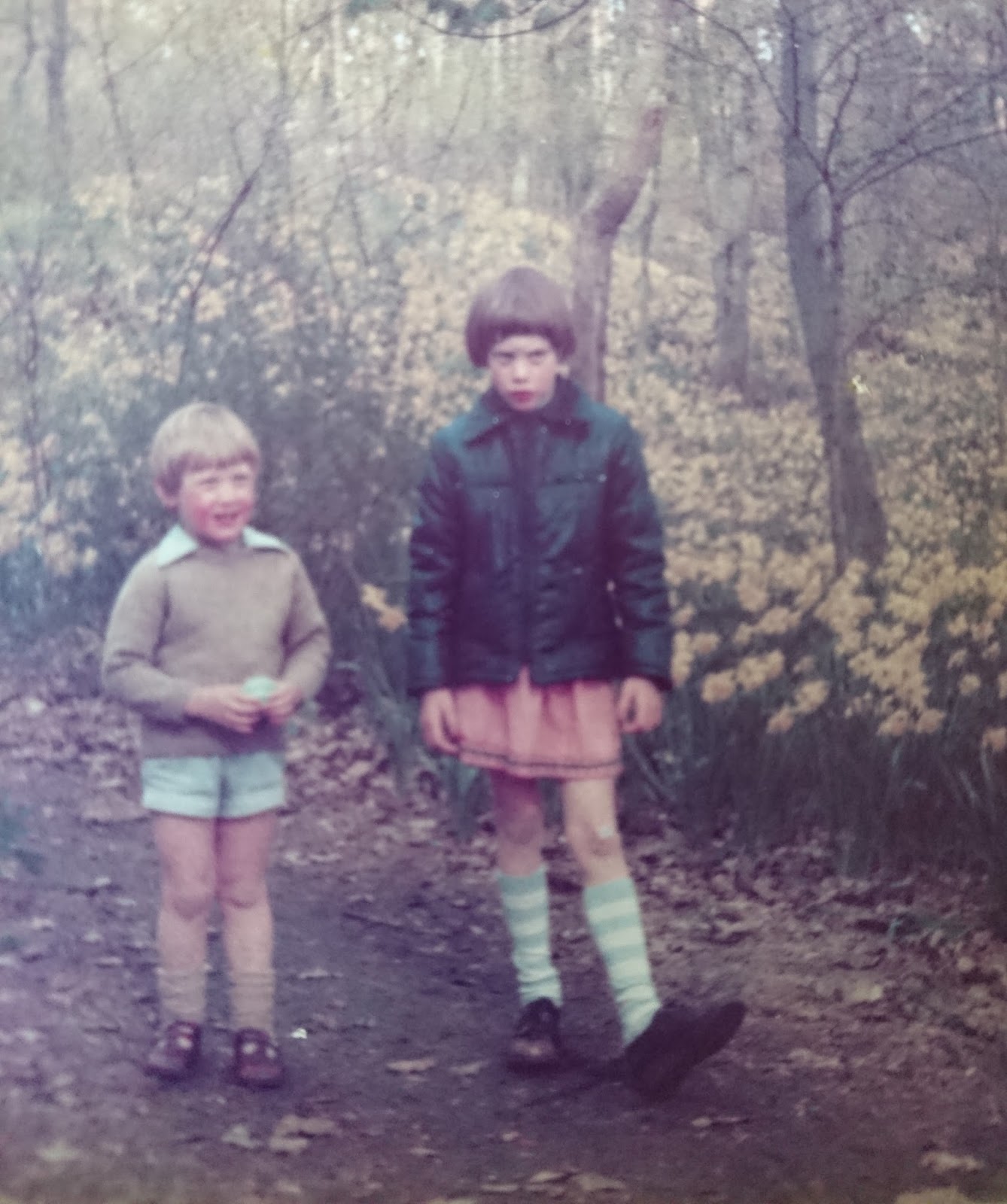
I found this in a family album recently and photographed it to show my son, who can occasionally have the same look when under duress.

Do we know how we look to others? Sometimes you get an inkling but it is different when you hear things directly. 

Maybe, travelling alone, determined, despite unknown floors and unknown dancers, not to return home with an aggravated knee injury I had been defensive and looked it at Tango Train because not two days earlier a man had said something similar to the Resting Bitch Face remark.

Do we in general trust what people of the same sex tell us more than what the opposite sex say? I have been taken aback by Dutch directness several times. When I heard what I did at the TangoTerras milonga at the Muziekgebouw aan 't IJ in Amsterdam I was not sure if the directness of it was just the Dutch way or a soft sort of punishment for not accepting the guy earlier that day or a genuine attempt at being helpful. Probably the latter. Still, that sort of 'feedback' from a stranger, mid-embrace, mid-dance is likely going to foreclose any genuine dance feeling between you or any attempt to get lost in a tango dance embrace. But actually, if you are having to try, clearly it isn’t just happening naturally. Dance communicates feeling and is not usually expressed in words.

The music and conditions of that milonga, especially the floor surface were far from ideal for me so I was particularly cautious. I saw a man with a kind face I recognised from the El Cielo milonga either that afternoon or from other afternoons that week. A short time later we were introduced by a mutual friend. The man seemed open, gentle, polite, attentive, respectful. I liked him. A little after that, he invited me by look. I accepted, a bit hesitantly because, well, do we always know why we accept? Because it was great D'Arienzo just then, because I was curious and precisely because that mutual friend had just introduced us and was still there. I thought I should at least tell him about the knee which has been holding out well - but then I had accepted very few guys that week. If guys don't turn out to be light and gentle dancing then one track can cause the damage.  It is often only then you have an opportunity to explain why you are resisting or avoiding pivots and as a knock on effect, why you are obviously tense. So sometimes I mention I have a knee problem up front.  He was very careful. 

I think he must have already spoken because I almost never initiate any chat during the dance but found myself thinking aloud: It is a shame that we did not dance this afternoon. I meant that the floor - the conditions generally - had been much better earlier and so I might have pivoted with less worry which might then have meant we both relaxed. Oh! he said. But I walked past to see if you were interested yet you gave me such a look as to say very clearly: “Don’t even think about it”. He mimed a mock version of just such a look. I stared, frozen in surprise, probably re-enacting the very same look as that I was charged with. He in turn arranged his features to an expression that was mock-quailing and understandable in anyone on the receiving end of such a fearsome thing as he plausibly had been - or perhaps in someone having second thoughts about raising such a subject on the dance floor.

I hope I looked apologetic. It was true, I had not looked to dance with him. I could remember the guys I had been looking for. It is also true that my for the most part fairly unconscious look can fend off anyone who appears insistent or who looks like they might be. Oh!, I said, aghast, suddenly aware that a look conveys more of my inner state than I realise - or at least, conveys it with more strength. 

And yet I was reminded of a girl friend who had whispered, helpfully after I endured a hellish dance from a handsome, happy guy at the Edinburgh International Tango Festival last year: You need to hide what you feel! 
- I know! I said. It was just…
We were just not compatible is all.  I had felt guilty and embarrassed during that dance and afterwards and, knowing I can be hopeless at dissembling some emotion had thereafter been even more careful about which guys I accepted, which is a good thing. 

In Amsterdam, the Dutchman, seeing my confusion said kindly: I don't mean to cause any bad feeling, It is just...feedback, you know.